How e-commerce is redefining global shopping trends
How e-commerce is redefining global shopping trends
by
8 min read
11 min read
8 min read
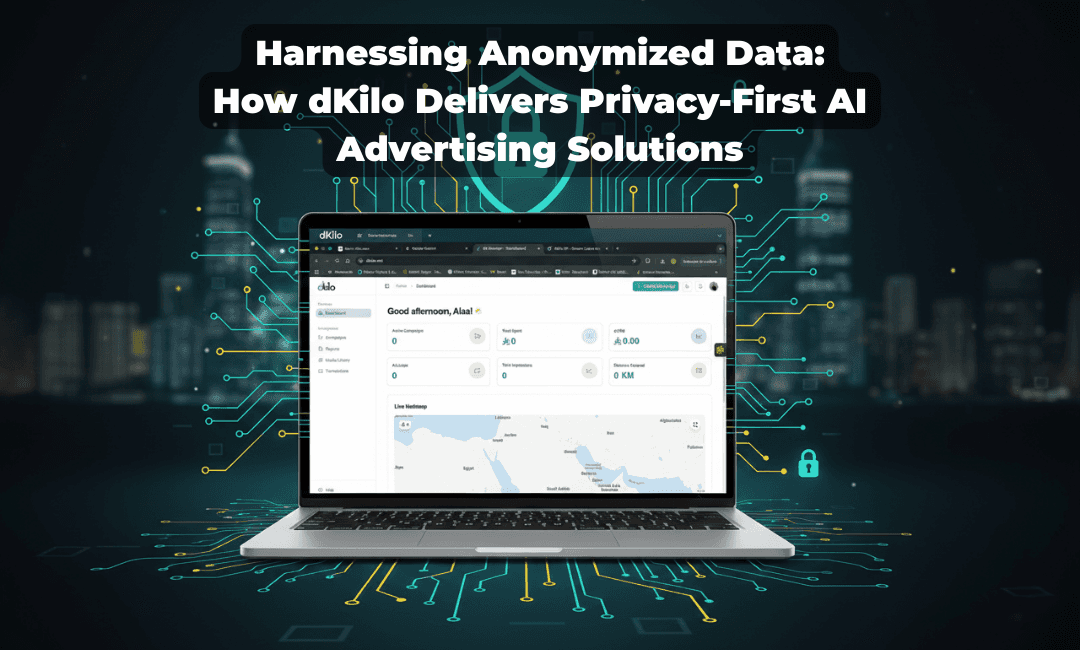
Privacy concerns have reshaped the advertising landscape, pushing companies to rethink how they use data. Advertisers and marketing managers face the challenge of reaching the right audience without compromising user trust or violating regulations. dKilo offers a clear path forward by combining AI with anonymized data, enabling precision targeting while respecting privacy.
Traditional advertising often relies on personal data, raising issues around consent and data protection laws like GDPR. Privacy-first advertising shifts the focus to methods that avoid collecting or using identifiable personal information. This approach builds trust with consumers and ensures compliance with strict regulations.
dKilo’s privacy strategy centers on advertising without personal data. Instead of tracking individuals, it uses aggregated and anonymized data sets. This method supports non-invasive audience targeting that respects user privacy and meets legal standards.
Artificial intelligence can analyze vast amounts of data to identify patterns and predict audience behavior. However, AI’s power comes with risks if it uses personal data improperly. dKilo addresses this by applying AI to anonymized data, creating privacy-safe AI advertising solutions.
By focusing on AI-based contextual targeting, dKilo matches ads to relevant environments and audience segments without needing personal identifiers. For example, instead of targeting a specific person, the system might target a location or time of day where a certain demographic is likely present. This approach maintains effectiveness while protecting privacy.
Digital out-of-home (DOOH) advertising offers unique opportunities and challenges for data privacy. DOOH screens appear in public spaces, making it impossible and unethical to collect personal data directly. dKilo uses anonymous targeting in DOOH by analyzing aggregated foot traffic patterns and environmental data.
This method respects digital out-of-home data privacy by avoiding any form of individual tracking. Instead, it focuses on group behaviors and contextual signals. For instance, dKilo’s AI can identify peak times for certain audience groups near a DOOH screen and deliver tailored ads accordingly.
Compliance with GDPR and similar regulations is essential for any ad tech company. dKilo’s platform is built with GDPR compliant ad tech principles at its core. It avoids storing or processing personal data and uses encryption and secure data handling practices.
This compliance reassures advertisers and business managers that their campaigns meet legal requirements. It also protects consumers by ensuring transparency and control over their data.
Cookies have long been a staple of digital advertising but face increasing restrictions due to privacy concerns. dKilo’s cookie-free targeting solutions eliminate reliance on these trackers. Instead, the platform uses anonymized data sources and AI to deliver relevant ads without cookies.
This approach reduces the risk of data breaches and enhances user trust. It also future-proofs campaigns against evolving privacy regulations and browser policies.
Retail Campaigns: dKilo uses foot traffic data around shopping centers to deliver ads relevant to the time and location, without identifying individual shoppers.
Event Promotions: By analyzing crowd density and movement patterns, dKilo targets ads to event attendees anonymously, increasing engagement without personal data.
Public Transport Advertising: AI analyzes anonymized commuter flows to optimize ad delivery on transit screens, respecting DOOH and user privacy.
These examples show how AI-driven privacy-first marketing can be both effective and respectful of data privacy.
Consumers increasingly demand transparency and control over their data. Brands that adopt privacy-first advertising practices build stronger relationships and avoid reputational risks. For advertisers and marketing managers, this means campaigns that perform well while aligning with ethical standards.
dKilo’s approach demonstrates that respecting privacy does not mean sacrificing precision. Instead, it offers a sustainable way to connect with audiences in a world where data privacy is paramount.